Feb 2, 2026
Learning by Doing: Craciun Robert on AI Adoption at Eva Estate
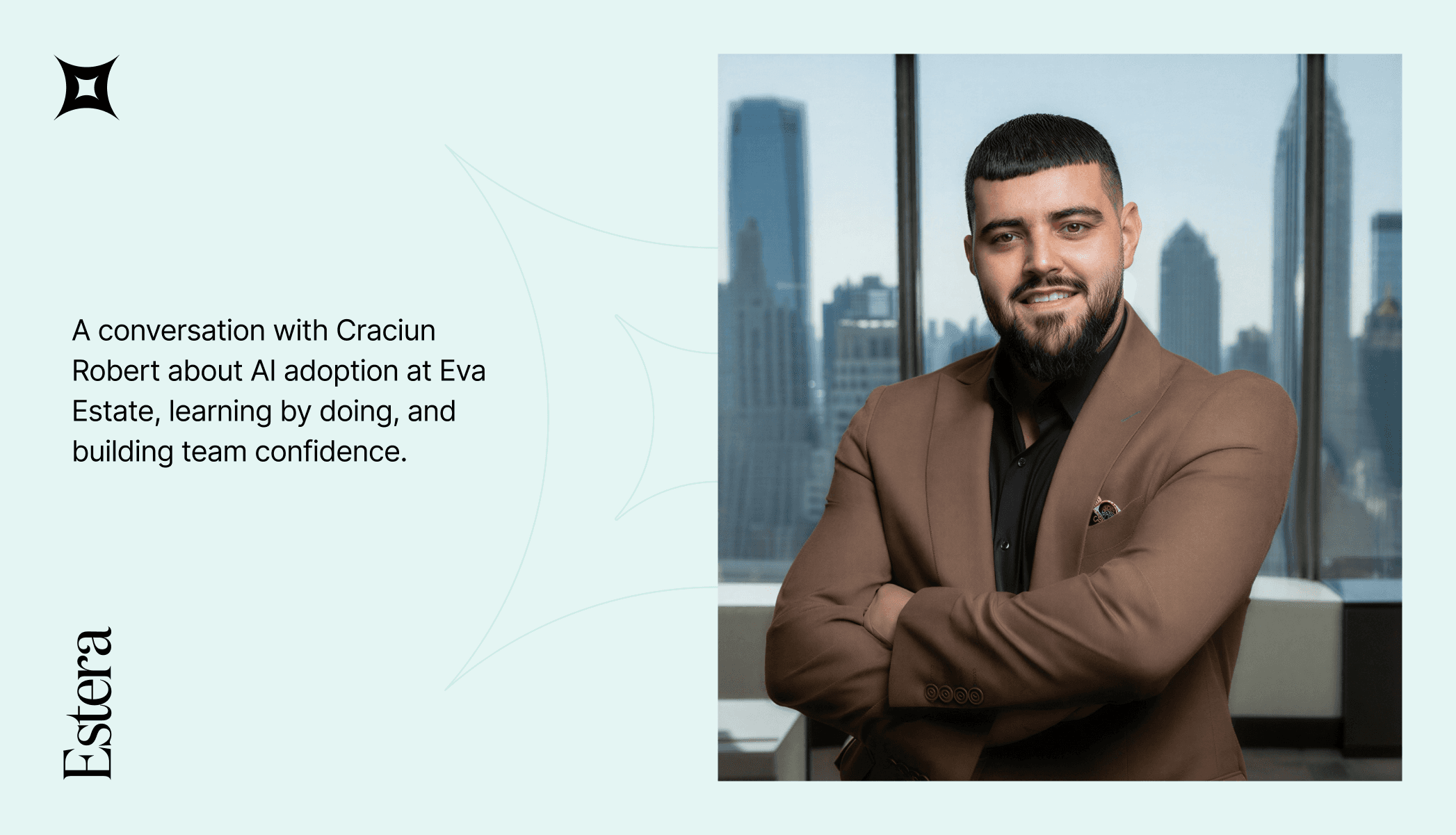
A conversation with Craciun Robert about AI adoption at Eva Estate, learning by doing, and building team confidence.
When people talk about AI in real estate, the conversation usually goes straight to tools and automation.
That wasn’t the starting point for Craciun Robert-Corneliu.
“We didn’t sit down with a big AI roadmap,” he says. “We started because the volume of early work just kept growing.”
Craciun is Managing Partner at Eva Estate, where prospecting, calls, and follow-ups sit very close to revenue. In the conversation below, we talk about how his team approached AI adoption in practice, what mattered early on, and why learning by doing made the difference.
When did AI first become something you seriously considered at Eva Estate?
It happened when the amount of prospecting work increased to the point where it was hard to keep up. Calls, follow-ups, initial conversations, a lot of time was going into things that didn’t always move forward. At that point, AI felt less like an experiment and more like a practical option.
Did you feel pressure to have everything planned out before starting?
Not really. And honestly, I think that would’ve slowed us down. You don’t really know how something fits until people start using it. Once the team began working with it, things became clearer very quickly.
What mattered most to you in the beginning?
Being able to see what was going on. In real estate, trust is very direct. You want to know who reached out, what was said, and why a certain next step was suggested. If that’s not visible, people are uncomfortable letting go.
How did Estera help with that?
It didn’t hide the activity. Conversations and calls were there to review, outcomes made sense, and handoffs weren’t confusing. That made it easier for the team to accept it, because it didn’t feel like we were losing control.
There’s often concern that AI autonomy means less human involvement. Was that an issue?
No, actually the opposite. Once we defined when AI should act and when a person should step in, it became easier to trust it. Clear rules helped everyone feel more comfortable with it taking on more work.
How did the team react overall?
It wasn’t instant adoption, and that’s normal. We started small, talked about what worked and what didn’t, and adjusted as we went. The important part was that it wasn’t one person experimenting alone — the team learned together.
How did security and data concerns play into this?
They were always in the background. Even if we weren’t talking about them every day, we needed to know where data lives and who has access. In this business, reputation matters, so clarity there was important.
Looking back, what changed the most once AI became part of your workflow?
Things felt less rushed. Calls were handled earlier, qualification was clearer, and meetings made more sense. Conversations started with context instead of starting from zero every time.
What would you say to teams that feel like they’re not ready yet?
You don’t really get ready first. You start small, keep things visible, and involve the team. That’s what builds confidence.
How would you describe Estera’s role for Eva Estate today?
It takes care of the early work that used to take a lot of time without always leading anywhere. Agents come in later, with better information. The goal was never to replace conversations, just to make sure the right ones happen.